

Ubuntu’s Krita packages are not all aimed at the same trade-off. You can install Krita on Ubuntu with Ubuntu’s own package for the simplest desktop integration, or switch to Flatpak or Snap when newer upstream builds matter more than staying inside the distro package set.
Krita is built for digital painting, concept art, comics, texture work, and 2D animation rather than general photo retouching. Krita’s official site also publishes a Linux AppImage on the official Krita download page, but package-managed methods fit Ubuntu better when you want easier updates and cleaner removal across Ubuntu 26.04, 24.04, and 22.04.
Install Krita on Ubuntu
Krita is available through Ubuntu’s repositories, Flathub, and Snapcraft. The best choice depends on whether you want Ubuntu-managed packages, the newest stable upstream build, or a package format you already use elsewhere on your system.
| Method | Channel | Version Track | Updates | Best For |
|---|---|---|---|---|
| APT | Ubuntu Packages | Distribution package | Managed through APT | Ubuntu-managed installs, especially on 24.04 and 22.04 where the package stays on the regular 5.x line |
| Flatpak | Flathub | Latest stable | Managed through Flatpak | The most consistent stable Krita release across all supported Ubuntu LTS versions |
| Snap | Snapcraft | Latest stable | Automatic background refreshes | Ubuntu users who already rely on snapd and want a self-contained package |
Ubuntu’s own package changes quite a bit by release: Ubuntu 26.04 currently provides Krita 1:6.0.0~beta3~ufsg-0ubuntu3, Ubuntu 24.04 provides 1:5.2.2+dfsg-2build8, and Ubuntu 22.04 provides 1:5.0.2+dfsg-1build1. Flatpak currently tracks Krita 5.2.16, while the Snap stable channel currently ships Krita 5.2.11. If you want Krita’s current stable series on Ubuntu 26.04, Flatpak is the cleaner default than the distro package right now.
- Choose APT if you want Krita managed entirely through Ubuntu’s package tools and you are comfortable with the version that ships for your release, especially on Ubuntu 24.04 and 22.04.
- Choose Flatpak if you want the newest stable Krita release across Ubuntu 26.04, 24.04, and 22.04.
- Choose Snap if you already use snapd and prefer automatic background refreshes without adding another application framework.
Install Krita from Ubuntu repositories
The APT method keeps Krita inside Ubuntu’s package manager and installs the translation pack at the same time. On Ubuntu 26.04, though, the repository currently carries Krita’s 6.0.0 beta 3 package rather than the 5.2 stable line.
sudo apt update && sudo apt upgradeThese commands use
sudofor system changes. If your account does not have sudo access yet, follow the guide on how to add a new user to sudoers on Ubuntu. Krita also comes from Ubuntu’suniversecomponent, so if APT cannot find the package, enable Universe and Multiverse in Ubuntu first.
sudo apt install krita krita-l10n -yUse dpkg-query here instead of krita --version. Krita is a GUI application, and the version flag aborts in a headless session with Qt display errors.
dpkg-query -W -f='${db:Status-Abbrev} ${Package} ${Version}\n' krita krita-data krita-l10nExpected output on Ubuntu 26.04:
ii  krita 1:6.0.0~beta3~ufsg-0ubuntu3
ii  krita-data 1:6.0.0~beta3~ufsg-0ubuntu3
ii  krita-l10n 1:6.0.0~beta3~ufsg-0ubuntu3
Ubuntu 24.04 shows 1:5.2.2+dfsg-2build8 for all three packages, and Ubuntu 22.04 shows 1:5.0.2+dfsg-1build1. If you prefer a newer stable Krita release than your Ubuntu package provides, move to the Flatpak or Snap methods instead.
Install Krita from Flathub
The Flathub build gives Ubuntu 26.04, 24.04, and 22.04 the same stable Krita package line. It is the cleanest choice when you want a newer stable release than Ubuntu ships for your LTS version.
Flatpak is not pre-installed on Ubuntu. If you have not set it up yet, follow the guide on how to install Flatpak on Ubuntu before continuing.
sudo flatpak remote-add --if-not-exists flathub https://dl.flathub.org/repo/flathub.flatpakrepoConfirm that Flathub exists at system scope before you install Krita from it.
flatpak remotes | grep "^flathub"Expected output:
flathub system
sudo flatpak install flathub org.kde.krita -yAfter the install finishes, flatpak info gives you a stable verification command that works for GUI apps without trying to open the desktop session.
flatpak info org.kde.kritaRelevant output includes:
Krita - Digital Painting, Creative Freedom

          ID: org.kde.krita
         Ref: app/org.kde.krita/x86_64/stable
        Arch: x86_64
      Branch: stable
     Version: 5.2.16
     License: GPL-3.0-only
      Origin: flathub
Installation: system
Install Krita from Snap Store
The Snap build is another self-contained package with automatic background refreshes. Standard Ubuntu desktop installs already include snapd, but minimal or customized systems may need it installed first.
sudo apt install snapd -ysudo snap install kritaUse snap list to confirm the installed revision and tracking channel.
snap list kritaExpected output:
Name   Version  Rev  Tracking       Publisher  Notes
krita  5.2.11   109  latest/stable  krita**    -
Launch Krita on Ubuntu
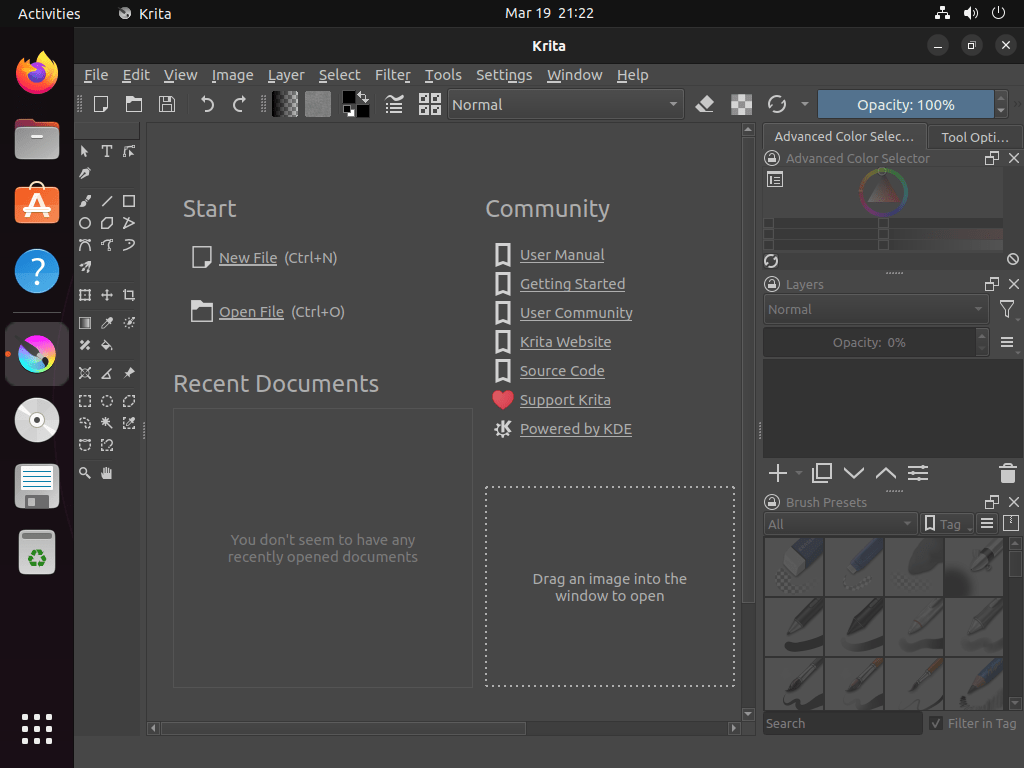
Krita installs from the terminal, but it still needs an active graphical session when you open the application. The launch command depends on the package format you used.
Launch Krita from the terminal on Ubuntu
Run the command that matches your installation method.
APT package:
kritaFlatpak package:
flatpak run org.kde.kritaSnap package:
snap run kritaLaunch Krita from Ubuntu’s applications menu
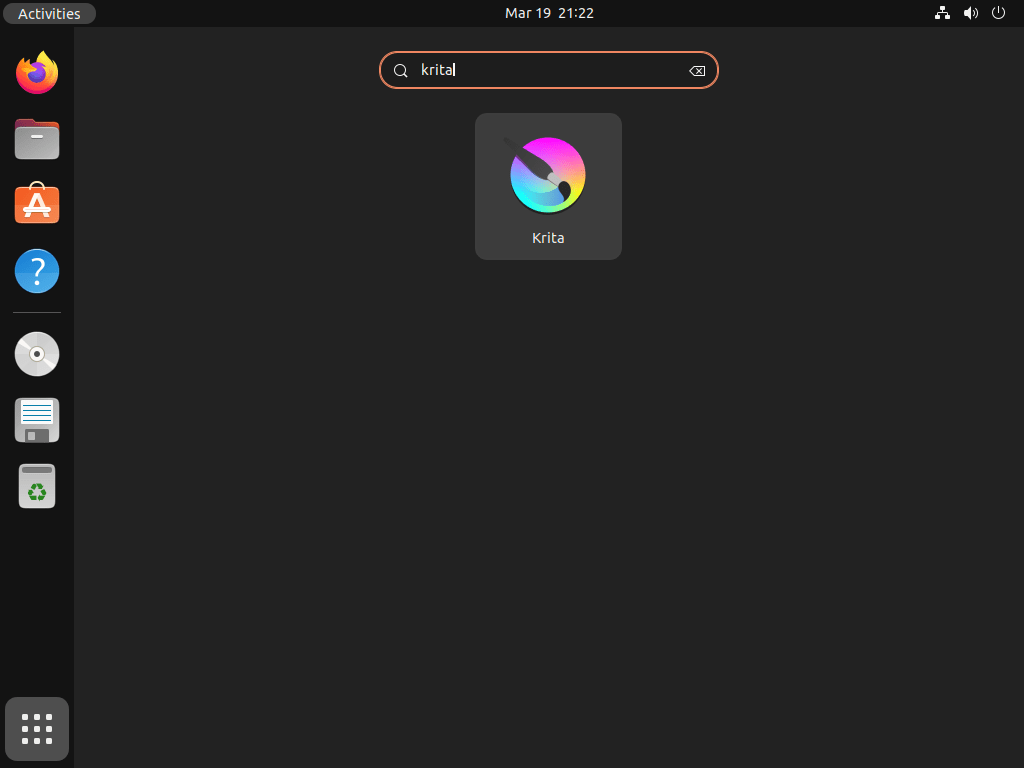
Open the Ubuntu applications menu, then look for Krita. On GNOME desktops, the usual path is Activities > Show Apps > Krita.
If you use Krita regularly, add it to your dock or favorites menu so the launcher stays one click away.
Update or remove Krita on Ubuntu
Use the management command that matches the package format you installed. Krita’s update and removal workflow is straightforward once you stay inside the same package manager.
Update Krita on Ubuntu
APT, Flatpak, and Snap each update Krita through their own package database.
APT package:
sudo apt install --only-upgrade krita krita-l10n -yFlatpak package:
sudo flatpak update org.kde.krita -ySnap package:
sudo snap refresh kritaRemove Krita on Ubuntu
Remove Krita with the package manager that installed it, then verify the package state before you clean up any leftover user files.
APT package:
sudo apt remove --purge --autoremove krita krita-l10n krita-data -yapt-cache policy kritaRelevant output includes:
krita:
  Installed: (none)
  Candidate: 1:6.0.0~beta3~ufsg-0ubuntu3
Flatpak package:
sudo flatpak remove org.kde.krita -ysudo flatpak uninstall --unused -yflatpak list --app | grep -F org.kde.krita || echo "not installed"Expected output:
not installed
Snap package:
sudo snap remove kritasnap list kritaRelevant output includes:
error: no matching snaps installed
Krita does not create its user-data directories until you launch the application. If you want a clean reset after using Krita, check which paths actually exist first instead of deleting them blindly.
ls -d "$HOME/.config/krita" "$HOME/.local/share/krita" "$HOME/.var/app/org.kde.krita" 2>/dev/nullIf the command prints one or more paths, remove only the locations you actually want to clear.
rm -rf "$HOME/.config/krita" "$HOME/.local/share/krita" "$HOME/.var/app/org.kde.krita"Troubleshoot Krita on Ubuntu
Most Ubuntu-side Krita problems come down to package visibility, graphics-stack issues, or package-format permissions. Start with the package manager and permission checks before you assume Krita itself is broken.
Fix missing Krita packages on Ubuntu
If APT returns Unable to locate package krita, Ubuntu usually cannot see the universe component yet. Check the package record first, then enable Universe if the candidate is missing.
apt-cache policy kritaA healthy Ubuntu package source shows a real Candidate value instead of (none). The exact version changes by release.
krita:
  Installed: (none)
  Candidate: 1:5.2.2+dfsg-2build8
This example matches Ubuntu 24.04. If the candidate stays empty on your release, follow the guide on how to enable Universe and Multiverse in Ubuntu, refresh APT, and check again.
Check Krita Flatpak permissions on Ubuntu
If the Flatpak build cannot see files, GPU access, or desktop integration you expect, inspect the live permission set before you add overrides. Krita’s current Flathub package already requests host filesystem access and DRI device access.
flatpak info --show-permissions org.kde.kritaRelevant output includes:
[Context]
shared=network;ipc;
sockets=x11;pulseaudio;
devices=dri;
filesystems=host;xdg-run/gvfs;
If the permissions already look like this, the problem is more likely in the desktop graphics stack than in Flatpak itself. When Krita still renders slowly or falls back to software rendering, upgrade Mesa drivers on Ubuntu before you dig deeper into the app package.
Krita on Ubuntu FAQ
Yes. Krita is a native Linux application, and Ubuntu 26.04, 24.04, and 22.04 all support it through Ubuntu packages, Flatpak, or Snap.
Yes. Krita’s official site publishes a Linux AppImage on its download page. Package-managed installs are usually easier on Ubuntu because updates and removal stay visible in APT, flatpak, or snapd.
Ubuntu packages Krita separately for each release. Ubuntu 26.04 currently carries Krita 6.0.0 beta 3, while Ubuntu 24.04 and 22.04 stay on older 5.x packages. For a stable Krita track that stays closer across all three Ubuntu LTS releases, use Flatpak or Snap instead.
Not for this Ubuntu workflow. The usual supported choices are Ubuntu’s own packages, the Flathub Flatpak, the Snap package, or Krita’s official AppImage download. For most Ubuntu users, that makes a separate Krita PPA unnecessary.
Conclusion
Krita is installed on Ubuntu and ready for painting, illustration, comics, texture work, or 2D animation. For deeper workspace tuning, the official Krita manual is the best next stop. For companion tools, install GIMP on Ubuntu for photo editing or install Inkscape on Ubuntu for vector work.

Formatting tips for your comment
You can use basic HTML to format your comment. Useful tags currently allowed in published comments:
<code>command</code>command<strong>bold</strong><em>italic</em><blockquote>quote</blockquote>