

Brave strips out much of the ad, tracker, and telemetry overhead that comes with a typical Chromium browser, so pages usually feel lighter before you add a single extension. You can install Brave Browser on Debian through Brave’s official APT repository, with a Flatpak build from Flathub available when you prefer a sandboxed desktop package.
The official repository works on Debian 13 (Trixie), 12 (Bookworm), and 11 (Bullseye), and it provides the stable package plus separate beta and nightly channels. The stable channel is the recommended path for routine Debian installs, while Brave also publishes DEB release assets on GitHub and keeps separate preview-channel repo endpoints for beta and nightly when you need them.
Install Brave Browser on Debian
Most Debian systems should use Brave’s official repository because it matches Brave’s own Linux instructions and keeps updates inside APT. Flatpak is still useful when you want a sandboxed stable build or already manage desktop applications through Flathub.
| Method | Channel | Packages Available | Updates | Best For |
|---|---|---|---|---|
| Official APT repository | Brave Linux | brave-browser, brave-browser-beta, brave-browser-nightly | Automatic via APT | Most Debian systems, native package integration, stable plus preview channels |
| Flatpak | Flathub | com.brave.Browser (stable) | Automatic via Flatpak | Sandboxed desktop installs |
Install Brave Browser from the Official APT Repository
This is the recommended Debian path because Brave documents it directly and the stable package installs cleanly on Debian 13, 12, and 11. Brave Beta and Brave Nightly remain separate packages, so you can keep a preview build beside the stable browser when you need it.
Start by refreshing APT metadata and making sure curl and ca-certificates are available for the HTTPS downloads:
sudo apt update
sudo apt install curl ca-certificates -y
These commands use
sudofor repository and package changes. If your account does not have sudo access yet, follow the guide on how to add a user to sudoers on Debian or run the steps as root.
Download Brave’s binary signing key into /usr/share/keyrings/, then place the published DEB822 repository file in /etc/apt/sources.list.d/:
sudo curl -fsSLo /usr/share/keyrings/brave-browser-archive-keyring.gpg https://brave-browser-apt-release.s3.brave.com/brave-browser-archive-keyring.gpg
sudo curl -fsSLo /etc/apt/sources.list.d/brave-browser-release.sources https://brave-browser-apt-release.s3.brave.com/brave-browser.sources
The -f flag makes curl stop on HTTP errors, -sS keeps normal output quiet while still printing failures, -L follows redirects, and -o writes each file directly to the target path. If you want to reuse the same pattern for other downloads, see how to use the curl command in Linux.
Refresh APT so Debian reads the new Brave source:
sudo apt updateGet:4 https://brave-browser-apt-release.s3.brave.com stable InRelease [7,547 B]
Install Brave Browser on Debian with sudo apt install brave-browser. That package gives you the stable browser and keeps updates in APT.
sudo apt install brave-browser -yBrave also maintains preview channels at Brave Beta for Linux and Brave Nightly for Linux. Use those channel pages only when you want preview builds, because each one uses its own keyring file and DEB822 source instead of the stable repository shown above.
Confirm that Debian sees the installed package and the Brave repository origin:
apt-cache policy brave-browser | sed -n '1,8p'brave-browser:
Installed: 1.88.134
Candidate: 1.88.134
Version table:
*** 1.88.134 500
500 https://brave-browser-apt-release.s3.brave.com stable/main amd64 Packages
100 /var/lib/dpkg/status
The package also supports a headless-safe version check over SSH, which is useful when you are verifying the install from a terminal before opening the graphical browser:
brave-browser --versionBrave Browser 146.1.88.134
The preview packages still install as brave-browser-beta and brave-browser-nightly, but keep them separate from the stable channel setup above so APT only tracks the Brave repository you actually want.
Install Brave Beta on Debian
Brave Beta is the next stable branch and uses its own keyring file, DEB822 source file, and package name. That separation lets you keep Beta beside the stable browser instead of replacing it.
sudo curl -fsSLo /usr/share/keyrings/brave-browser-beta-archive-keyring.gpg https://brave-browser-apt-beta.s3.brave.com/brave-browser-beta-archive-keyring.gpg
sudo curl -fsSLo /etc/apt/sources.list.d/brave-browser-beta.sources https://brave-browser-apt-beta.s3.brave.com/brave-browser.sources
sudo apt update
sudo apt install brave-browser-beta -y
Check the installed Beta build with:
brave-browser-beta --versionBrave Browser Beta 146.1.89.118 beta
Install Brave Nightly on Debian
Brave Nightly tracks the earliest public Linux builds, so expect more frequent changes and more breakage risk than Beta or stable. It also uses its own repository files, which keeps the nightly package isolated from the other channels.
sudo curl -fsSLo /usr/share/keyrings/brave-browser-nightly-archive-keyring.gpg https://brave-browser-apt-nightly.s3.brave.com/brave-browser-nightly-archive-keyring.gpg
sudo curl -fsSLo /etc/apt/sources.list.d/brave-browser-nightly.sources https://brave-browser-apt-nightly.s3.brave.com/brave-browser.sources
sudo apt update
sudo apt install brave-browser-nightly -y
Check the installed Nightly build with:
brave-browser-nightly --versionBrave Browser Nightly 146.1.90.49 nightly
Install Brave Browser from Flatpak on Debian
Use the Flatpak method when you want a sandboxed stable build or already keep your desktop applications in Flathub. Brave maintains the Flathub package, but Brave’s Linux page still recommends the native repository when your Debian system can use it.
If Flatpak is not installed yet, follow the guide on how to install Flatpak on Debian before adding Flathub.
Add Flathub at system scope, then confirm that Debian sees the remote:
sudo flatpak remote-add --if-not-exists flathub https://dl.flathub.org/repo/flathub.flatpakrepo
flatpak remotes
flathub system
The Brave Flatpak app ID is com.brave.Browser. Install it from Flathub with:
sudo flatpak install flathub com.brave.Browser -yVerify the installed Flatpak metadata and branch:
flatpak info com.brave.Browser | sed -n '1,12p'Ref: app/com.brave.Browser/x86_64/stable ID: com.brave.Browser Arch: x86_64 Branch: stable Version: 1.88.134 Origin: flathub Installation: system
Launch Brave Browser on Debian
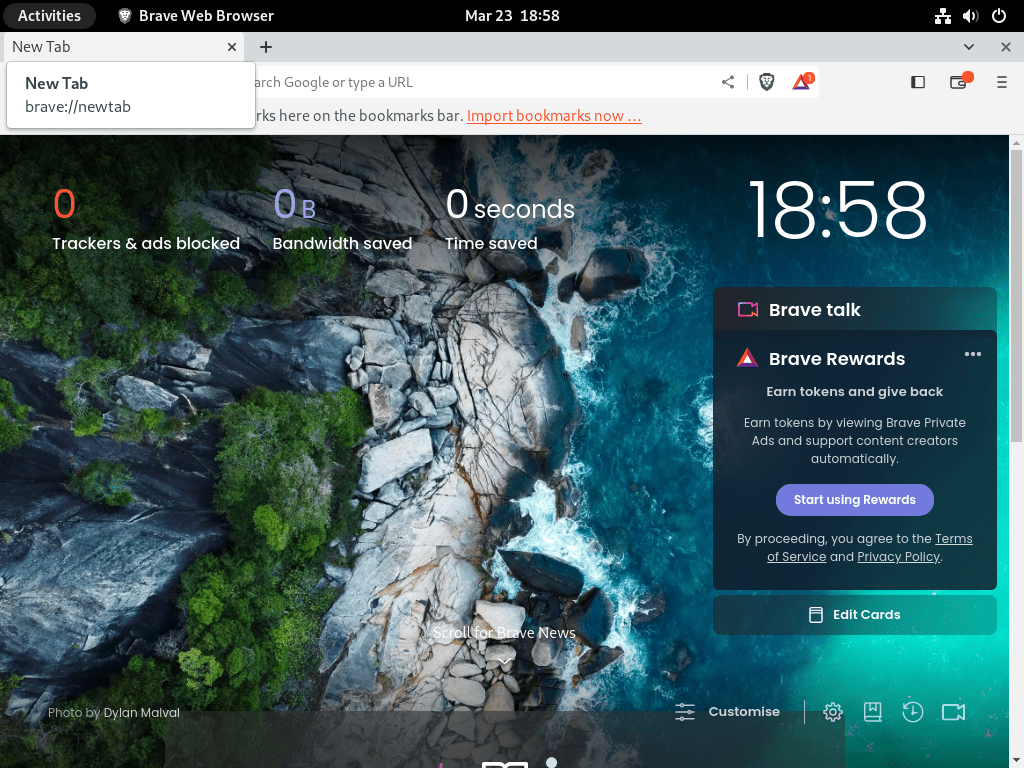
Once the package is installed, Brave appears in GNOME, KDE, and most other desktop menus automatically. You can install the package from an SSH shell or a minimal image, but the browser itself still needs a graphical session before it can open a window.
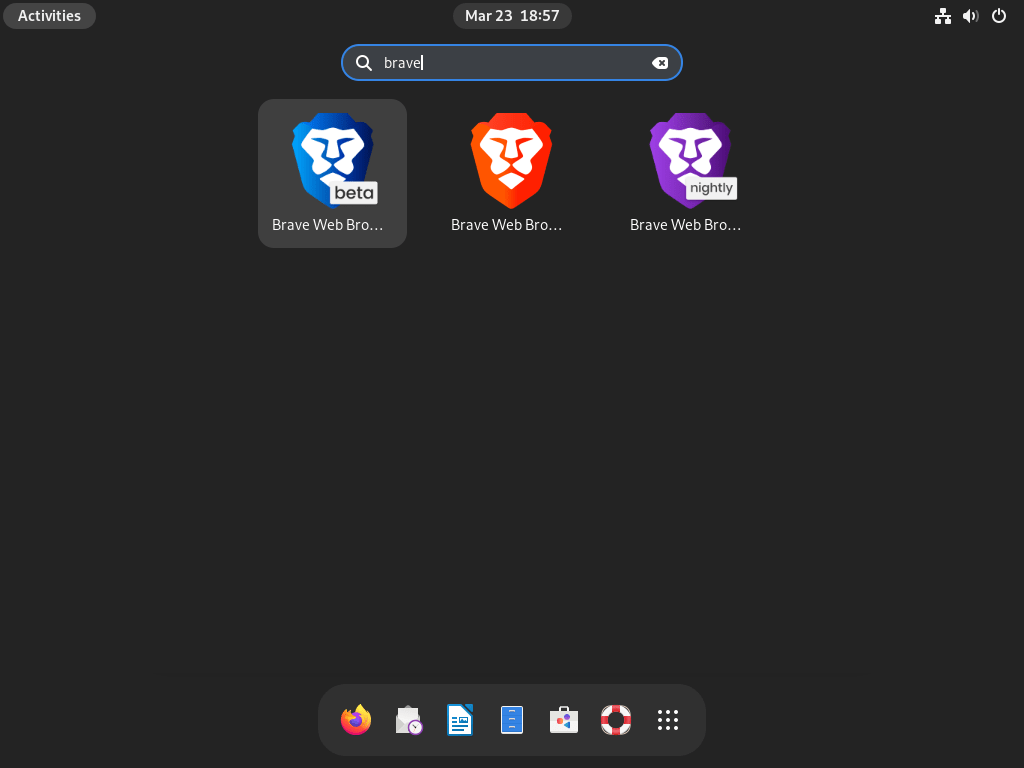
Launch Brave Browser from the Applications Menu
Open your desktop launcher, search for Brave, and start the browser from the application entry created by the package you installed.
Launch Brave Browser from the Terminal
Use the launcher command that matches the package you installed:
brave-browser
brave-browser-beta
brave-browser-nightly
flatpak run com.brave.Browser
Troubleshoot Brave Browser on Debian
Most Brave installation problems on Debian come down to repository files, package visibility, or graphical-session issues after an otherwise successful install.
Fix Brave Browser Repository Errors on Debian
APT signature failures or missing-source errors usually mean the Brave key file or the DEB822 source file is missing, renamed, or pointing at the wrong key path.
grep -E '^(URIs|Suites|Components|Signed-By):' /etc/apt/sources.list.d/brave-browser-release.sourcesURIs: https://brave-browser-apt-release.s3.brave.com Suites: stable Components: main Signed-By: /usr/share/keyrings/brave-browser-archive-keyring.gpg
If the file is missing or the Signed-By line points somewhere else, download the stable key and .sources file again, then rerun sudo apt update.
sudo curl -fsSLo /usr/share/keyrings/brave-browser-archive-keyring.gpg https://brave-browser-apt-release.s3.brave.com/brave-browser-archive-keyring.gpg
sudo curl -fsSLo /etc/apt/sources.list.d/brave-browser-release.sources https://brave-browser-apt-release.s3.brave.com/brave-browser.sources
sudo apt update
Fix Brave Browser Package Detection on Debian
When APT says it cannot locate brave-browser, the Brave repository usually did not load during the last package index refresh.
apt-cache policy brave-browser | sed -n '1,8p'brave-browser:
Installed: (none)
Candidate: 1.88.134
Version table:
1.88.134 500
500 https://brave-browser-apt-release.s3.brave.com stable/main amd64 Packages
If the candidate is (none), rerun the repository download commands, make sure the source file still points at https://brave-browser-apt-release.s3.brave.com, and then run sudo apt update again.
Fix Brave Browser Launch Problems on Debian
A successful package install does not guarantee that the current session can open a graphical browser window. Debian 13, 12, and 11 do not expose the Ubuntu-style kernel.apparmor_restrict_unprivileged_userns knob, and the Brave package did not install a separate AppArmor profile during validation, so start with display and GPU checks before chasing Ubuntu-specific sandbox advice.
echo "$XDG_SESSION_TYPE"
brave-browser --disable-gpu
If you launched the command from SSH, reconnect to a local desktop session and try again there. When --disable-gpu fixes the launch, the next step is updating your graphics stack or keeping that flag in a temporary launcher override while you isolate the driver issue.
Update or Remove Brave Browser on Debian
APT and Flatpak both keep Brave manageable after the initial install, so updates and removals are straightforward once you stick to the same package source.
Update Brave Browser on Debian APT Installs
Refresh package metadata, then upgrade the stable package if you installed Brave from the official APT repository:
sudo apt update
sudo apt install --only-upgrade brave-browser -y
If you already configured Brave Beta or Brave Nightly from Brave’s preview-channel pages, run the same command with brave-browser-beta or brave-browser-nightly instead.
Update Brave Browser on Debian Flatpak Installs
Flatpak updates the Brave sandboxed build independently from APT:
sudo flatpak update com.brave.Browser -yRemove Brave Browser from Debian APT Installs
Remove the browser package first, then clean up the Brave repository files yourself. Separating those steps makes the cleanup easier to audit because --autoremove can also remove helper packages such as brave-keyring.
sudo apt remove --autoremove -y brave-browserIf you installed Brave Beta or Brave Nightly from Brave’s preview-channel pages, swap in brave-browser-beta or brave-browser-nightly for the package name below.
Delete the stable repository file and key, then refresh APT so Debian drops the Brave source cleanly:
sudo rm -f /etc/apt/sources.list.d/brave-browser-release.sources /usr/share/keyrings/brave-browser-archive-keyring.gpg
sudo apt update
Preview-channel installs use the same cleanup pattern with the beta or nightly filenames published on Brave’s Linux preview pages.
For Brave Beta, remove /etc/apt/sources.list.d/brave-browser-beta.sources and /usr/share/keyrings/brave-browser-beta-archive-keyring.gpg. For Brave Nightly, remove /etc/apt/sources.list.d/brave-browser-nightly.sources and /usr/share/keyrings/brave-browser-nightly-archive-keyring.gpg after uninstalling the package.
Check that the package is no longer installable from a live Brave repository:
apt-cache policy brave-browser | sed -n '1,8p'brave-browser:
Installed: (none)
Candidate: (none)
Version table:
1.88.134 -1
100 /var/lib/dpkg/status
A lone
100 /var/lib/dpkg/statusline reflects localdpkghistory after removal. It does not mean the Brave repository is still enabled.
Remove Brave Browser from Debian Flatpak Installs
Remove the Flathub build with its app ID, then confirm that the application no longer appears in the installed app list:
sudo flatpak remove com.brave.Browser -y
flatpak list --app | grep -F com.brave.Browser || echo "not installed"
not installed
Brave Browser on Debian FAQ
No. Debian’s default repositories do not package Brave Browser. On Debian, use Brave’s official APT repository for native packages or install the stable Flatpak build from Flathub.
Yes. The same DEB822 repository file works on Debian 13 (Trixie), 12 (Bookworm), and 11 (Bullseye). The stable brave-browser package resolves on all three releases with the same repository layout.
The stable browser installs as brave-browser. Brave Beta uses brave-browser-beta, and Brave Nightly uses brave-browser-nightly as separate packages.
Yes. Brave publishes DEB release assets on GitHub, but its Linux install page recommends the official APT repository for routine Debian installs because updates stay integrated with APT. The standalone DEB makes more sense when you intentionally want a manual or pinned install.
Most Debian systems are better served by Brave’s official APT repository. Brave maintains the Flatpak on Flathub, but Brave’s Linux page says the native packages currently work better and remain the recommended option when your system can use them.
Conclusion
Brave Browser is ready on Debian through either Brave’s native APT repository or the Flathub build, and the update and removal paths stay clean once you keep each install method separate. If you want to compare it with other daily browsers, you can install Firefox on Debian, install Chromium Browser on Debian, or install Vivaldi Browser on Debian.

Formatting tips for your comment
You can use basic HTML to format your comment. Useful tags currently allowed in published comments:
<code>command</code>command<strong>bold</strong><em>italic</em><blockquote>quote</blockquote>