

Querying databases from a terminal works until you need to compare table layouts, save repeatable SQL, or tunnel through SSH to a remote host. To install Beekeeper Studio on Debian, you can use the official APT repository or Flathub and get a desktop SQL client for MySQL, MariaDB, PostgreSQL, SQLite, SQL Server, MongoDB, Redis, CockroachDB, and other common back ends.
Both methods work on Debian 13 (trixie), Debian 12 (bookworm), and Debian 11 (bullseye). Beekeeper Studio also publishes direct downloads, but the repository and Flatpak routes are easier to maintain because updates stay tied to apt or flatpak instead of a manual download.
Install Beekeeper Studio on Debian
Beekeeper Studio is not in Debian’s default repositories, so on Debian the maintained installation choices are the official Beekeeper APT repository and the Flathub Flatpak. The APT route fits most amd64 desktops, while Flatpak is the better fit when you want sandboxing or prefer the Flathub package.
| Method | Channel | Version | Updates | Best For |
|---|---|---|---|---|
| APT repository | Official Beekeeper repository | Current repository release | Automatic through apt | amd64 desktops that want native Debian package management |
| Flatpak | Flathub | Current Flathub stable build | Automatic through flatpak update | Sandboxed installs and users who already manage desktop apps with Flatpak |
If you want the path that feels most like a regular Debian desktop package, use the APT repository. If you prefer a sandboxed app bundle, or you already keep desktop software in Flathub, use the Flatpak build instead.
Update Debian Before Installing Beekeeper Studio
Refresh Debian’s package lists and install any pending updates before adding a new software source.
sudo apt update && sudo apt upgrade -yThis article uses
sudofor package-management commands. If your account does not have sudo access yet, follow the guide on how to add a user to sudoers on Debian.
The -y flag accepts APT’s confirmation prompt so the upgrade can finish in one pass.
Install Beekeeper Studio from the Official APT Repository
The official repository is the cleanest Debian option when you want Beekeeper Studio to update alongside the rest of your APT-managed desktop software.
sudo apt install ca-certificates curl gpg -yUse the curl command in Linux to download the signing key, then store it in a dedicated APT keyring instead of the deprecated apt-key workflow.
curl -fsSL https://deb.beekeeperstudio.io/beekeeper.key | sudo gpg --dearmor -o /usr/share/keyrings/beekeeper.gpgThe sudo gpg --dearmor command converts the ASCII-armored key into a binary keyring that APT can trust from /usr/share/keyrings/.
printf '%s\n' \
'Types: deb' \
'URIs: https://deb.beekeeperstudio.io' \
'Suites: stable' \
'Components: main' \
'Architectures: amd64' \
'Signed-By: /usr/share/keyrings/beekeeper.gpg' | sudo tee /etc/apt/sources.list.d/beekeeper-studio.sources > /dev/null
The tee command writes the DEB822 repository file as root. A plain > redirection would still run in your unprivileged shell and fail when it tried to write into /etc/apt/sources.list.d/.
sudo apt updateAPT should now fetch the Beekeeper metadata from the new repository.
Get:1 https://deb.beekeeperstudio.io stable InRelease [3,068 B]
Get:2 https://deb.beekeeperstudio.io stable/main amd64 Packages [4,806 B]
Reading package lists... Done
sudo apt install beekeeper-studio -yDebian 12 and Debian 11 can create an extra beekeeper-studio-app.list file during package install. If a later apt update reports duplicate Beekeeper repository entries, remove that extra file and rerun APT with the cleanup command shown later in this article.
apt-cache policy beekeeper-studioUse the package policy output to confirm the installed version and the repository source.
beekeeper-studio:
  Installed: 5.x.x
  Candidate: 5.x.x
  Version table:
 *** 5.x.x 500
        500 https://deb.beekeeperstudio.io stable/main amd64 Packages
        100 /var/lib/dpkg/status
The version number is a placeholder. Your output will show the current Beekeeper Studio release available from the repository.
Install Beekeeper Studio from Flathub
The Flathub build keeps Beekeeper Studio isolated from the rest of your system and follows the same install flow across all supported Debian releases.
If Flatpak is not installed yet, follow the guide to install Flatpak on Debian before continuing.
sudo flatpak remote-add --if-not-exists flathub https://dl.flathub.org/repo/flathub.flatpakrepoThe --if-not-exists flag skips the remote-add step when Flathub is already configured.
flatpak remotesFlathub should appear as a system remote before you install the application.
flathub system
sudo flatpak install flathub io.beekeeperstudio.Studio -yflatpak info io.beekeeperstudio.StudioThe Flatpak metadata confirms the application ID, installation scope, and active runtime.
Beekeeper Studio - The SQL Editor and Database Manager Of Your Dreams

          ID: io.beekeeperstudio.Studio
         Ref: app/io.beekeeperstudio.Studio/x86_64/stable
        Arch: x86_64
      Branch: stable
     Version: 5.x.x
      Origin: flathub
Installation: system
The Flathub manifest already includes network access, X11 and Wayland sockets, GPU acceleration, and ssh-auth, so normal database connections and SSH tunneling do not need extra Flatpak override commands.
Launch Beekeeper Studio on Debian
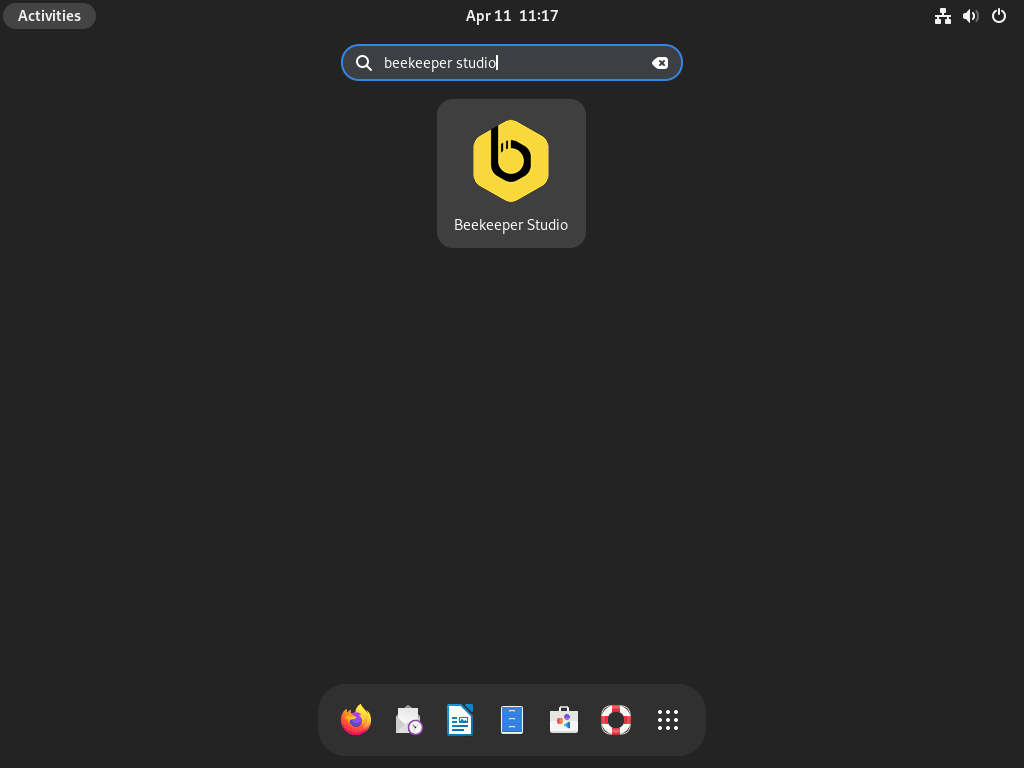
Start Beekeeper Studio from Debian’s application menu, or use these commands from a local desktop terminal. These launch commands need an active graphical session, so over plain SSH you should verify the install with apt-cache policy or flatpak info instead of trying to open the GUI.
# APT installation
beekeeper-studio

# Flatpak installation
flatpak run io.beekeeperstudio.Studio
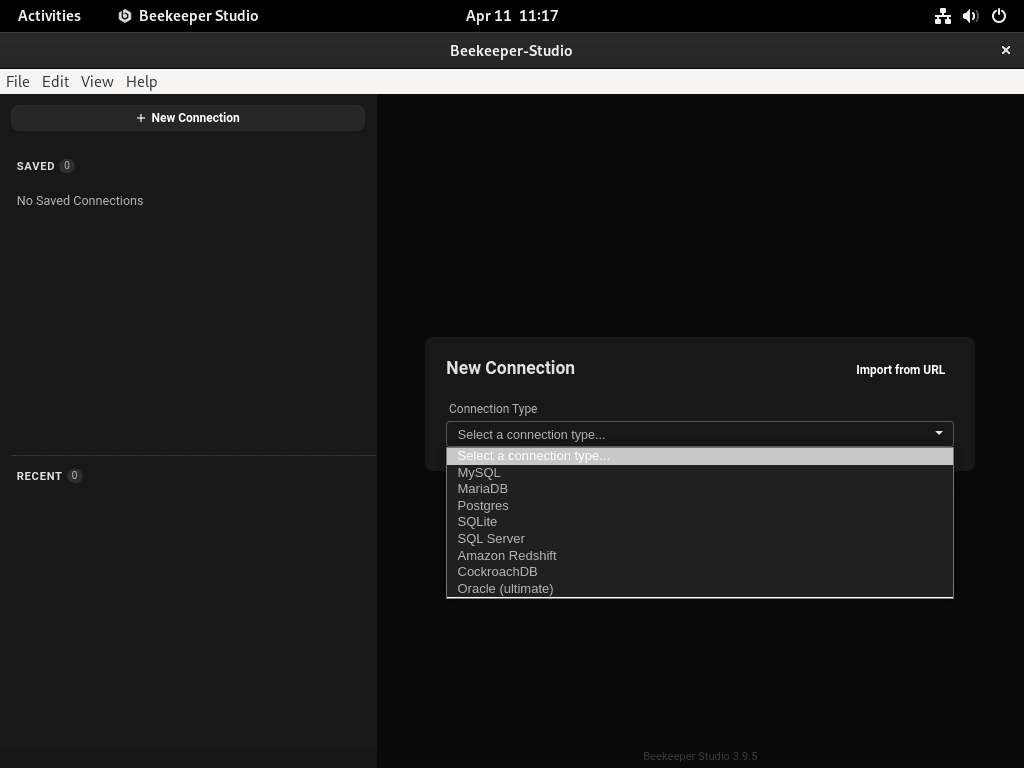
When the window opens, choose the database driver, fill in the host, port, username, and database name, then save the connection if you expect to reuse it. If the database sits behind a private network or firewall, enable Beekeeper Studio’s SSH tunnel option and point it at a host where you already install SSH and enable it on Debian.
For a quick test backend, you can install MariaDB on Debian, install MySQL 8.0 on Debian, install PostgreSQL 15 on Debian, or install SQLite on Debian and connect to it from the Beekeeper Studio start screen.
Update Beekeeper Studio on Debian
Use the update command that matches your installation method so Beekeeper Studio stays current without touching unrelated packages.
APT installations update cleanly with a targeted package upgrade.
sudo apt update && sudo apt install --only-upgrade beekeeper-studio -yIf Debian 12 or Debian 11 recreates the legacy beekeeper-studio-app.list file during a reinstall or package configure run, remove that extra file and rerun sudo apt update before the next upgrade.
Flatpak installations update with the app’s Flathub ref.
sudo flatpak update io.beekeeperstudio.Studio -yTroubleshoot Beekeeper Studio on Debian
Most Debian problems with Beekeeper Studio come from duplicate APT source files on Debian 12 or 11, or from trying to launch the desktop app in a shell that has no graphical session.
Fix Duplicate Beekeeper Repository Warnings on Debian 12 or 11
If apt update warns that Beekeeper targets are configured multiple times, the package likely created both beekeeper-studio.sources and beekeeper-studio-app.list.
W: Target Packages (main/binary-amd64/Packages) is configured multiple times in /etc/apt/sources.list.d/beekeeper-studio-app.list:1 and /etc/apt/sources.list.d/beekeeper-studio.sources:1
Remove the legacy .list file and refresh APT so Debian only keeps the DEB822 source entry.
sudo rm -f /etc/apt/sources.list.d/beekeeper-studio-app.list && sudo apt updateThe next check uses the grep command in Linux to show only Beekeeper-related source files.
ls -1 /etc/apt/sources.list.d | grep beekeeperAfter cleanup, Debian should only show the DEB822 source file.
beekeeper-studio.sources
Run Beekeeper Studio in a Local Desktop Session on Debian
Beekeeper Studio is an Electron desktop application, so launching it from a plain SSH session or a TTY without X11 or Wayland will fail even when the package is installed correctly.
Missing X server or $DISPLAY
That error usually means the GUI was started from a shell that has no graphical session attached. Verify the install with apt-cache policy beekeeper-studio or flatpak info io.beekeeperstudio.Studio, then start the app from Debian’s desktop menu or a local graphical terminal instead.
Remove Beekeeper Studio from Debian
Removing the package or Flatpak does not automatically erase saved connections or local history. Those stay in your home directory until you delete them yourself.
Remove the APT Build of Beekeeper Studio
Remove the Debian package first, then delete the repository file and signing key.
sudo apt remove beekeeper-studio -ysudo rm -f /etc/apt/sources.list.d/beekeeper-studio.sources /etc/apt/sources.list.d/beekeeper-studio-app.list /usr/share/keyrings/beekeeper.gpgsudo apt update && apt-cache policy beekeeper-studioThe package should show as removed, and the repository should no longer offer a candidate version.
beekeeper-studio:
  Installed: (none)
  Candidate: (none)
  Version table:
     5.x.x -1
        100 /var/lib/dpkg/status
The remaining
/var/lib/dpkg/statusentry is normal afterapt remove. It shows the last installed package version until you purge it or reinstall it later.
Remove the Flatpak Build of Beekeeper Studio
Remove the Flathub application first, then confirm it no longer appears in the installed app list.
sudo flatpak remove io.beekeeperstudio.Studio -yflatpak list --app | grep -F io.beekeeperstudio.Studio || echo "not installed"If the Flatpak app is gone, the check prints a simple confirmation string.
not installed
Remove Beekeeper Studio Data Directories
APT installs leave data in ~/.config/beekeeper-studio/, while Flatpak installs also use ~/.var/app/io.beekeeperstudio.Studio/. If you tested both methods, you may have both directories.
These commands permanently delete saved connections, query history, and local Beekeeper Studio preferences. Keep a copy of any connection details you still need before you remove the directories.
rm -rf ~/.config/beekeeper-studio/
rm -rf ~/.var/app/io.beekeeperstudio.Studio/
test ! -d ~/.config/beekeeper-studio && test ! -d ~/.var/app/io.beekeeperstudio.Studio && echo "Beekeeper Studio data directories removed"If both directories are gone, the cleanup check prints a success message.
Beekeeper Studio data directories removed
Beekeeper Studio on Debian FAQ
Yes. Beekeeper Studio publishes direct .deb downloads from its GitHub releases page, and upstream notes that installing that package also sets up the repository. This Debian guide stays with the repository and Flathub methods because they are easier to update and maintain over time.
Use the APT repository when you want native Debian package management and the fastest path to new Beekeeper Studio releases. Use the Flatpak build when you prefer sandboxing or want the Flathub package workflow instead.
Yes. The APT and Flatpak builds both support SSH tunneling, so you can reach a database through a Debian host that only exposes SSH. In the connection dialog, enable the SSH tunnel option and enter the jump-host details before saving the database connection.
Beekeeper Studio supports MySQL, MariaDB, PostgreSQL, SQLite, SQL Server, MongoDB, Redis, CockroachDB, and several other databases on Debian. The exact driver list can grow between releases, but the Debian APT and Flathub builds expose the same application features.
Conclusion
Beekeeper Studio is ready on Debian for local database work and SSH-tunneled remote sessions. If you still need a backend, install MariaDB on Debian or install PostgreSQL 15 on Debian. For remote hosts, install SSH and enable it on Debian before saving a tunneled connection.

Formatting tips for your comment
You can use basic HTML to format your comment. Useful tags currently allowed:
<code>command</code>command<strong>bold</strong><em>italic</em><blockquote>quote</blockquote>