

This guide explains how to install Steam on Debian using Valve’s official repository, Debian packages, or Flatpak. You will enable 32-bit library support required for most games, configure Steam Play with Proton for Windows game compatibility, and set up your system for Linux gaming. By the end, you will have full access to your game library with automatic updates and cloud saves.
Prepare Your Debian System
Update System Packages
Before installing Steam, update your package lists and upgrade installed packages to prevent dependency conflicts:
sudo apt update && sudo apt upgradeInstall Prerequisites
Next, install curl and certificate packages needed to add the Steam repository:
sudo apt install ca-certificates curl -yEnable 32-bit Architecture
Since Steam and most games require 32-bit libraries, you need to enable multiarch support to install both 64-bit and 32-bit packages:
sudo dpkg --add-architecture i386
sudo apt update
Verify multiarch is enabled by checking for 32-bit architecture support:
dpkg --print-foreign-architecturesi386
This step is essential because Steam’s runtime and many games ship as 32-bit binaries, even on modern 64-bit systems.
For optimal gaming performance, consider installing proprietary GPU drivers before Steam. NVIDIA users should see How to Install NVIDIA Drivers on Debian. AMD and Intel users typically get good performance from the default Mesa drivers included with Debian.
Choose Your Steam Installation Method
At this point, you can install Steam from Debian’s repositories, Valve’s official repository, extrepo, or as a Flatpak. The following table summarizes the differences between these methods:
| Method | Channel | Version | Updates | Best For |
|---|---|---|---|---|
| Debian Repository | Debian Packages | Stable | Via apt upgrade | Debian 12/13 users who prefer distro-tested packages |
| Extrepo | Valve via extrepo | Latest | Via apt upgrade | Users who want Valve’s repo with simpler setup |
| Steam Repository | Valve APT Repository | Latest | Via apt upgrade | Most users who want current Steam features |
| Flatpak | Flathub | Latest | Via flatpak update | Users who prefer sandboxed apps |
Debian Repository provides a stable version tested by Debian maintainers but may lag behind Valve’s releases by several weeks. Extrepo simplifies adding Valve’s repository using Debian’s repository management tool. Steam Repository delivers the latest client directly from Valve with manual repository configuration. Flatpak runs Steam in a sandboxed environment but may experience occasional issues with controller support or game overlays.
For most users, the Steam Repository method is recommended because it provides the latest client directly from Valve with automatic updates through APT and full hardware access without sandboxing limitations.
This guide covers Debian 13 (Trixie), Debian 12 (Bookworm), and Debian 11 (Bullseye). The Debian Repository method (Option 1) is only available on Debian 12 and 13—Debian 11 users should use the Steam Repository, extrepo, or Flatpak methods instead. All other commands work identically across supported releases.
Important: Choose only ONE installation method below. Using multiple methods (for example, both extrepo and the manual Steam Repository) creates conflicting GPG key configurations that cause
apt updateerrors.
Option 1: Install from Debian Repository
The Debian repository provides a stable but slightly older Steam client. However, this method requires enabling the contrib component in your sources.
The
steam-installerpackage requires thecontribcomponent enabled in your APT sources and is only available in Debian 12 and 13. If you are running Debian 11, use one of the other methods below. If you haven’t enabled contrib, see How to Enable Contrib and Non-Free on Debian first.
Once enabled, install Steam from the Debian repository:
sudo apt install steam-installer -yNext, verify the installation:
apt-cache policy steam-installersteam-installer:
Installed: 1:1.0.0.83~ds-3
Candidate: 1:1.0.0.83~ds-3
Version table:
*** 1:1.0.0.83~ds-3 500
500 http://deb.debian.org/debian trixie/contrib amd64 Packages
100 /var/lib/dpkg/status
Option 2: Install via Extrepo
Alternatively, Debian’s extrepo tool simplifies adding third-party repositories including Valve’s Steam repository. This method handles GPG keys and repository configuration automatically.
First, install extrepo:
sudo apt install extrepo -ySince Steam is classified as non-free software, you need to enable the non-free policy in extrepo’s configuration:
sudo sed -i 's/# - non-free/- non-free/' /etc/extrepo/config.yamlNext, enable the Steam repository:
sudo extrepo enable steamNow update APT and install Steam:
sudo apt update && sudo apt install steam-launcher -yVerify the installation by checking the package source:
apt-cache policy steam-launchersteam-launcher:
Installed: 1:1.0.0.85
Candidate: 1:1.0.0.85
Version table:
*** 1:1.0.0.85 500
500 http://repo.steampowered.com/steam stable/steam amd64 Packages
100 /var/lib/dpkg/status
The output confirms Steam installed from Valve’s repository via extrepo.
Option 3: Install from Steam Repository
For users who prefer manual repository configuration, Valve maintains an official APT repository that provides the latest Steam client. This method requires importing the GPG key and adding the repository to your sources.
Import Steam GPG Key
First, download and store the GPG key that authenticates packages from the Steam repository:
curl -fsSL https://repo.steampowered.com/steam/archive/stable/steam.gpg | sudo tee /usr/share/keyrings/steam.gpg > /dev/nullAdd Steam Repository
Then, create the repository source file using the modern DEB822 format:
cat <<EOF | sudo tee /etc/apt/sources.list.d/steam.sources
Types: deb
URIs: https://repo.steampowered.com/steam/
Suites: stable
Components: steam
Architectures: amd64 i386
Signed-By: /usr/share/keyrings/steam.gpg
EOF
Update Package Lists
Now refresh APT to recognize the new repository:
sudo apt updateInstall Steam Launcher
With the repository configured, install the Steam Launcher package. APT automatically resolves all required dependencies including Mesa OpenGL libraries:
sudo apt install steam-launcher -yVerify Installation
Finally, confirm Steam installed from the correct repository:
apt-cache policy steam-launchersteam-launcher:
Installed: 1:1.0.0.85
Candidate: 1:1.0.0.85
Version table:
*** 1:1.0.0.85 500
500 https://repo.steampowered.com/steam stable/steam amd64 Packages
100 /var/lib/dpkg/status
As shown above, the output displays the Steam repository as the source, confirming you have the latest client from Valve.
Clean Up Duplicate Repository Files
After first launch, Steam’s installer may create additional legacy .list repository files that duplicate your DEB822 configuration. Check if you have multiple Steam repository files:
ls /etc/apt/sources.list.d/steam*If you see both .list and .sources files, you have duplicates. Remove the legacy .list files and keep only your DEB822 steam.sources configuration:
sudo rm /etc/apt/sources.list.d/steam-beta.list /etc/apt/sources.list.d/steam-stable.list 2>/dev/null
sudo apt updateThese files are created by Steam’s post-install script during initial launch, not during updates. See the Troubleshooting section below for more details on repository conflicts.
Option 4: Install Steam via Flatpak
As another option, Flatpak provides Steam in a sandboxed environment with automatic updates from Flathub. This method isolates Steam from your system packages.
Before continuing, this method requires Flatpak configured with the Flathub repository. If you haven’t set up Flatpak, see How to Install Flatpak on Debian first.
Once Flatpak is configured, install Steam from Flathub:
flatpak install flathub com.valvesoftware.Steam -yAfter installation completes, verify Steam appears in your Flatpak list:
flatpak list | grep SteamSteam com.valvesoftware.Steam <version> stable flathub
To start the application, run Steam via Flatpak:
flatpak run com.valvesoftware.SteamLaunch Steam
Once installation completes, launch Steam to complete the initial setup and download required runtime components.
Launch from Terminal
To start Steam quickly, run the client from your terminal:
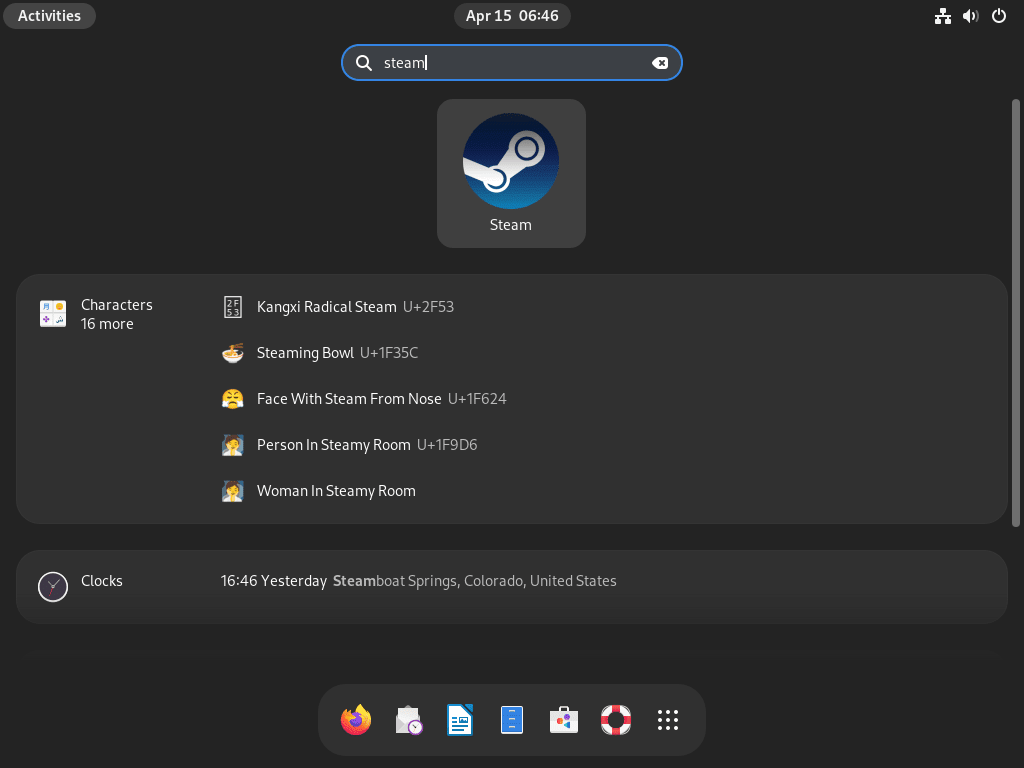
steamLaunch from Applications Menu
Alternatively, open Steam from your desktop environment’s application menu:
- First, click on the “Activities” or “Applications” menu, depending on your Debian desktop environment.
- Then, search for “Steam” in the search bar.
- Finally, click on the “Steam” icon to launch the application.
First-time Setup
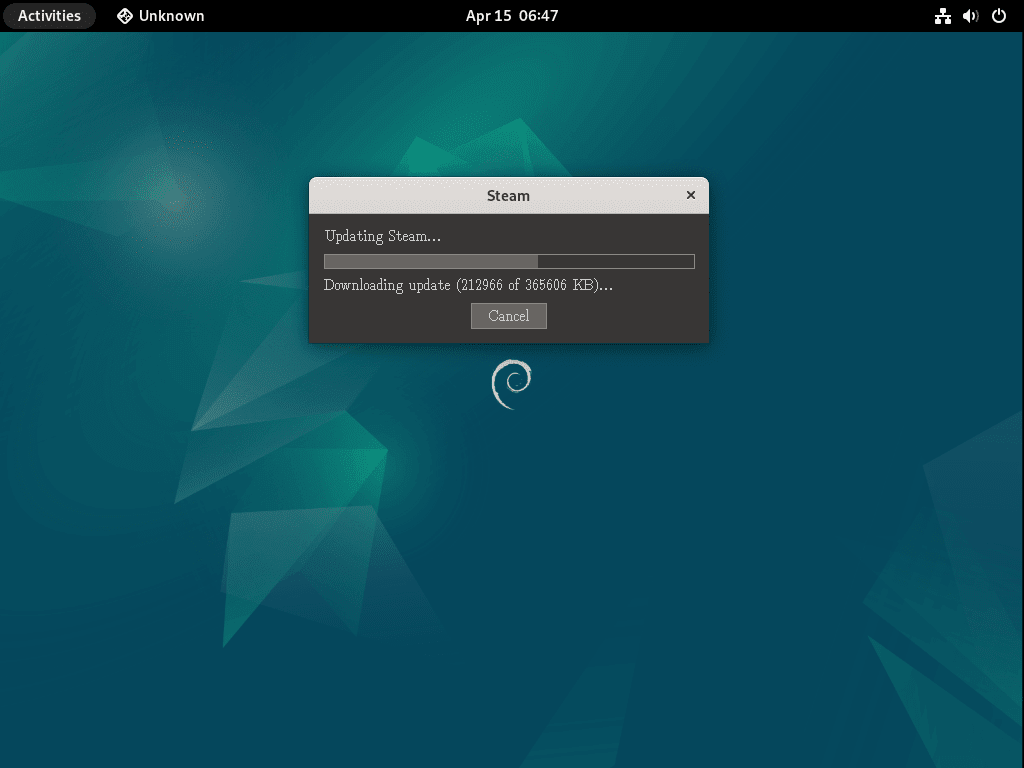
During the first launch, Steam downloads its runtime environment and updates the client to the latest version. This initial download typically takes 2-5 minutes depending on your connection speed, so let it complete without interruption.
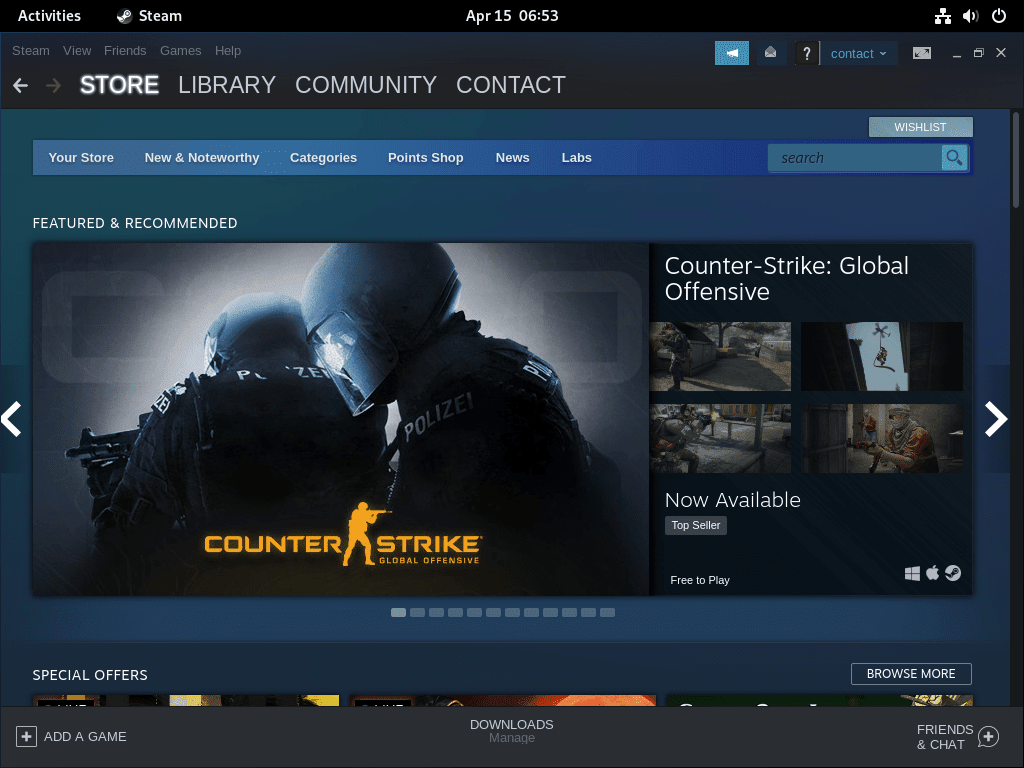
Once the update finishes, sign in with your existing Steam account or create a new one. After logging in, Steam automatically detects your hardware and applies appropriate settings for your system.
Enable Steam Play for Windows Games
To play Windows games on Debian, enable Steam Play with Proton compatibility. Navigate to Steam > Settings > Compatibility, then check Enable Steam Play for all other titles. Select the latest Proton version from the dropdown menu. This setting allows you to install and run Windows-only games directly from your Linux library.
Not every Windows game works perfectly with Proton. Before purchasing, check compatibility ratings at ProtonDB where the community reports which games run well and which need tweaks.
Manage Steam
Update Steam
Steam updates itself automatically each time you launch the client. The application checks for updates on startup and downloads them before proceeding to the main interface. However, the APT package (steam-launcher or steam-installer) also receives periodic updates through your normal system upgrades:
sudo apt update && sudo apt upgradeFor Flatpak installations, update Steam alongside other Flatpak applications:
flatpak update com.valvesoftware.SteamRemove Steam
To completely remove Steam from your system, uninstall the package and clean up any repository configuration files. The steps differ slightly depending on your installation method.
Remove APT Installation
First, remove Steam and its dependencies. This command handles both Debian repository and Steam repository installations:
sudo apt remove --purge --autoremove steam-launcher steam-installer -yNext, remove any repository files. Steam may have created multiple files during installation and first launch. If you used extrepo, disable the repository first:
command -v extrepo &>/dev/null && sudo extrepo disable steam 2>/dev/null
sudo rm -f /etc/apt/sources.list.d/steam.sources /etc/apt/sources.list.d/steam*.list /etc/apt/sources.list.d/extrepo_steam.sourcesThen, remove the Steam signing keys (paths vary based on installation method):
sudo rm -f /usr/share/keyrings/steam.gpg /var/lib/extrepo/keys/steam.ascFinally, refresh APT to confirm the repository is fully removed:
sudo apt updateVerify Steam packages are no longer available from the removed repository:
apt-cache policy steam-launcher steam-installersteam-launcher: Installed: (none) Candidate: (none) Version table: steam-installer: Installed: (none) Candidate: (none) Version table:
Depending on your installation method, you originally had only steam-launcher (from Valve’s repository or extrepo) or steam-installer (from Debian’s repository), not both. The output shows (none) for candidate on both packages because no Steam repository remains configured, confirming successful removal.
Remove Flatpak Installation
For Flatpak installations, uninstall Steam with:
flatpak uninstall com.valvesoftware.SteamOptionally, remove unused Flatpak runtimes to free disk space:
flatpak uninstall --unusedRemove User Data
Steam stores game data in
~/.steamand~/.local/share/Steam. These directories contain your downloaded games, save files, and configuration. Keep them if you plan to reinstall Steam later, or delete them to reclaim disk space.
The following command permanently deletes all Steam data including downloaded games, save files, screenshots, and configuration. This action cannot be undone. Back up any save files you want to keep before proceeding.
To remove all Steam user data and downloaded games:
rm -rf ~/.steam ~/.local/share/SteamTroubleshoot Steam Issues
While Steam installation typically proceeds smoothly on Debian, you may encounter repository conflicts or graphics driver issues. The following troubleshooting steps address the most common problems.
Duplicate Repository Warnings During apt update
If you see warnings about duplicate sources when running apt update, Steam likely created legacy .list files that conflict with your DEB822 .sources configuration:
W: Target Packages (steam/binary-amd64/Packages) is configured multiple times in /etc/apt/sources.list.d/steam-stable.list:1 and /etc/apt/sources.list.d/steam.sources
First, check what repository files exist:
ls /etc/apt/sources.list.d/steam*/etc/apt/sources.list.d/steam-beta.list /etc/apt/sources.list.d/steam-stable.list /etc/apt/sources.list.d/steam.sources
If you see both .list and .sources files, remove the legacy duplicates:
sudo rm /etc/apt/sources.list.d/steam-beta.list /etc/apt/sources.list.d/steam-stable.list 2>/dev/null
sudo apt updateVerify the warning no longer appears. If apt update completes without duplicate source warnings, the fix succeeded. The 2>/dev/null suppresses errors if files don’t exist, making this command safe to run regardless of which files are present.
Steam Fails to Launch or Shows Black Screen
Graphics driver issues are the most common cause of Steam launch failures on Debian. First, verify your GPU is detected and drivers are loaded:
lspci | grep -i vgaExample output for different GPU types:
00:02.0 VGA compatible controller: Intel Corporation UHD Graphics 630 01:00.0 VGA compatible controller: NVIDIA Corporation GA106 [GeForce RTX 3060]
If no output appears, your GPU may not be properly detected. Check your BIOS settings or hardware connections.
For NVIDIA GPUs, check if the proprietary driver is active:
nvidia-smiA working NVIDIA driver displays output similar to:
+-----------------------------------------------------------------------------------------+ | NVIDIA-SMI 560.35.03 Driver Version: 560.35.03 CUDA Version: 12.6 | |-----------------------------------------+------------------------+----------------------+ | GPU Name Persistence-M | Bus-Id Disp.A | Volatile Uncorr. ECC | | 0 NVIDIA GeForce RTX 3060 Off | 00000000:01:00.0 On | N/A | +-----------------------------------------------------------------------------------------+
If this command fails with “command not found” or shows errors like “NVIDIA-SMI has failed”, install the NVIDIA drivers. See How to Install NVIDIA Drivers on Debian for complete instructions.
For AMD or Intel GPUs, ensure Mesa is current:
glxinfo | grep "OpenGL renderer"Expected output showing your GPU:
OpenGL renderer string: Mesa Intel(R) UHD Graphics 630 (CFL GT2)
If glxinfo is not found, install the Mesa utilities:
sudo apt install mesa-utilsMissing 32-bit Libraries
If Steam or games crash with library errors, verify 32-bit architecture is enabled:
dpkg --print-foreign-architecturesi386
If i386 doesn’t appear in the output, add 32-bit architecture support and reinstall Steam:
sudo dpkg --add-architecture i386
sudo apt update
sudo apt install --reinstall steam-launcherFor NVIDIA GPU users: If you see errors about missing libGL.so.1 or “wrong ELF class: ELFCLASS64” even with i386 enabled, your NVIDIA driver installation is missing 32-bit OpenGL libraries. Install the 32-bit driver libraries:
sudo apt install nvidia-driver-libs:i386This package provides libgl1-nvidia-glvnd-glx:i386 and other 32-bit GL dependencies Steam requires. Reboot after installation.
Games Fail to Start When Library Is Under /usr/
If you store your Steam library under a path containing /usr (such as /usr/games/steam/), games will fail to launch without clear error messages. Check ~/.local/share/Steam/logs/console-linux.txt for entries like:
pressure-vessel-wrap: W: Not sharing path STEAM_COMPAT_DATA_PATH="/usr/games/steam/steamapps/compatdata/..." with container because "/usr" is reserved by the container framework
Steam’s pressure-vessel container framework reserves the /usr hierarchy for its own runtime libraries. Any Steam library path containing /usr will silently fail because pressure-vessel cannot share those directories with the container.
To fix this, move your Steam library to a directory outside /usr:
- In Steam, go to Settings > Storage
- Add a new library folder under your home directory (for example,
/home/username/SteamLibrary) - Move your games to the new library by right-clicking them in your library and selecting Properties > Local Files > Move Install Folder
After moving games to a non-reserved path, they should launch normally.
Common Questions
Steam itself and the majority of games in the Steam catalog ship as 32-bit binaries for compatibility reasons. Even on a 64-bit Debian system, you must enable i386 architecture support so APT can install the required 32-bit libraries for Steam and games to run.
Steam’s installer creates legacy .list repository files during first launch. If you also configured a DEB822 .sources file (as shown in this guide), both files point to the same repository, triggering duplicate warnings. Remove the .list files with sudo rm /etc/apt/sources.list.d/steam*.list and keep only your .sources file.
No. Using both methods creates conflicting GPG key configurations that cause Signed-By errors during apt update. Choose one method only. If you already used both, disable the extrepo Steam repository with sudo extrepo disable steam and remove any duplicate files before using the manual method.
The steam-installer package comes from Debian’s contrib repository and is maintained by Debian packagers. The steam-launcher package comes directly from Valve’s repository and provides newer client versions. Both download and install the full Steam client on first run, but steam-launcher receives updates faster since it comes directly from Valve.
Conclusion
You now have Steam installed on Debian with access to native Linux games and Windows titles through Proton. With Steam Play enabled, your entire library becomes accessible regardless of platform. For better graphics performance, install NVIDIA drivers on Debian if you have an NVIDIA GPU, or ensure Mesa is current for AMD and Intel graphics. For improved frame pacing and reduced input latency, consider installing the Liquorix kernel on Debian which is optimized for desktop responsiveness and gaming workloads. Additionally, for games outside Steam’s library, Wine on Debian provides Windows compatibility for standalone titles. Finally, for voice chat with other gamers, install Discord on Debian.
Just installed Debian 13.2 on a 64-bit Intel machine. Installed Nvidia driver for RTX-3050 from Debian repo. Tried to install Steam per this web page. Got the following error when I got to the step:
sudo apt update
Error: conflicting values set for option Signed-By regarding source
http://repo.steampowered.com/ steam
stable: /var/lib/extrepo/steam/keys.asc != /usr/share/keyrings/steam.gpg
The apt update command went ahead and downloaded and installed a bunch of stuff. Then I tried to start ‘steam’ and it wanted to update a lot more stuff, but at the end of these updates I got another error message:
Error: you are missing the following 32bit libraries, and steam may not run:
libGL.so.1
and a few lines down from that we see:
dlmopen steamui.so failed: libGL.so.1: wrong ELF class: ELFCLASS64
and ‘steam’ fails to start.
Eventually I fixed this step of the process by renaming (effectively deleting) this file:
/etc/apt/sources.list.d/extrepo_steam.sources
to:
/etc/apt/sources.list.d/extrepo_steam.sources.X
I then did ‘sudo apt update’ and it completed without error.
However, I then downloaded a game (“Age Of Mythlogy”) and tried to run it, but got a new set of errors. I will make a separate post about this.
Sorry for missing your first message, Steve. Good troubleshooting on both issues. The
Signed-Byconflict looks like it happened because both the extrepo method and manual Steam repository method were used on your system. Extrepo stores the GPG key at/var/lib/extrepo/steam/keys.asc, while the manual method uses/usr/share/keyrings/steam.gpg. If that was the case, your fix of removingextrepo_steam.sourceswas exactly right. Can you confirm whether both methods were used? That would help verify the cause.For the missing 32-bit
libGL.so.1error, this happens when NVIDIA’s 32-bit OpenGL libraries are not installed alongside the 64-bit driver. On Debian 13 with an RTX 3050, install the 32-bit driver libraries meta-package:This package pulls in
libgl1-nvidia-glvnd-glx:i386and all other 32-bit GL dependencies Steam needs. After installation, reboot and try launching Steam again. The “wrong ELF class: ELFCLASS64” error confirms Steam found only the 64-bit library when it needed the 32-bit version. Looking forward to your follow-up post about the Age of Mythology errors.Hi Joshua – sorry for the long delay. Looks like you have removed the instructions for using the Debian ‘extrepo’ method of getting Steam from the official Steam repos? Also, just FYI, the text near the top mentions “Ubuntu” several times when I think you meant “Debian”. But – I dunno – can Debian “apt” install packages from Ubuntu repos? (maybe – Ubuntu is based on Debian, isn’t it?)
I do not remember using the “manual method” to install Steam via the Steam repos. I think I did a clean install. I have been using “Clonezilla” quite a bit, to image my Debian disks, so I can easily go back a step or two if something does not work. Thus I have an image of the system right after completing the initial installation of Debian and applying all the updates. I think I used that to start from.
I am currently going through this exact same procedure on a new machine which I just built, (and which should handle most any modern game) so I will make certain I do *not* even attempt the manual method, and I will try out the modified method I present here and see if I wind up with those same three files needing to be deleted…
——————–
I previously used that ‘extrepo’ method successfully after making one small change to the procedure on your page. On my initial attempt, I followed the procedure on the page down to the point:
$ sudo apt install extrepo -y
$ sudo extrepo enable steam
and then, to check for success I did:
$ apt-cache policy steam-launcher
E: Conflicting values set for option Signed-By
regarding source http://repo.steampowered.com/steam/
stable: /var/lib/extrepo/keys/steam.asc != /usr/share/keyrings/steam.gpg
E: The list of sources could not be read.
To fix this I effectively deleted the following file by renaming it:
/etc/apt/sources.list.d/extrepo_steam.sources.X
Then the “apt-cache” check was successful:
apt-cache policy steam-launcher
steam-launcher:
  Installed: 1:1.0.0.85
  Candidate: 1:1.0.0.85
  Version table:
 *** 1:1.0.0.85 500
        500 https://repo.steampowered.com/steam stable/steam amd64 Packages
        100 /var/lib/dpkg/status
N: Ignoring file ‘extrepo_steam.sources.X’ in directory ‘/etc/apt/sources.list.d/’
as it has an invalid filename extension
Next I installed the i386 Nvidia libraries:
sudo apt install nvidia-driver-libs:i386
which completed without error. Then, per instructions here on your page, I disabled two more files under /etc/apt/sources.list.d/:
/etc/apt/sources.list.d$ ls -Fla
total 20
drwxr-xr-x 2 root root 4096 Jan 23 14:46 ./
drwxr-xr-x 9 root root 4096 Jan 23 13:46 ../
-rw-r–r– 1 root root 163 Jan 23 14:01 extrepo_steam.sources.X
-rw-r–r– 1 root root 296 Sep 30 08:27 steam-beta.list.X
-rw-r–r– 1 root root 228 Sep 30 08:27 steam-stable.list.X
After this I was able to start ‘steam’ which then downloaded 400+MB of updates
and installed them without error. I was then able to login to Steam and authenticate
as usual and I then saw my Library contents as expected.
At this point I was sure everything would work, so I downloaded “Age of Mythology – Extended Edition” to my new Steam installation on Debian. To my dismay, AOM *still* would not start up! I then looked at some logs, did some searches, and discovered to my aghast amazement that you cannot save your Linux Steam games on any path that contains the character string “/usr”. (!) Guess where I had mine stored? Long story but on my system I thought putting my Steam library under “/usr/games” would be “The Right Thing To Do” – but alas! In log file
~/.local/share/Steam/logs/console-linux.txt
I found errors like this:
[2026-01-23 21:40:51] Couldn’t write /usr/.steam_exec_test.sh: Permission denied
[2026-01-23 21:40:51] Couldn’t write /debian_data/.steam_exec_test.sh: Permission denied
and like this:
[2026-01-23 22:36:50] pressure-vessel-wrap[29528]: W: Not sharing path
STEAM_COMPAT_DATA_PATH=”/usr/games/steam/steamapps/compatdata/266840″
with container because “/usr” is reserved by the container framework
So I moved my Steam library from “/usr/games” to under my “/home” directory, and then, finally AOM started up and actually worked! I chose AOM for this test because I thought it had the best chance of actually running on an 18 year old motherboard with 8GB of RAM and an RTX-3050 graphics card with 2GB VRAM. Other more modern titles like “Stellaris” or “Manor Lords” will download and install without error, but they will not start up. Sadly, there are no error or even log messages that I can find to indicate if the problem is system RAM or video RAM or something else. I will perhaps find out if it is “something else” because I am now going to install Steam on another Debian machine I just built which should be able to run any modern game.
I like the Debian ‘extrepo’ method because it allows me to have the latest version of Steam from the official Valve repos without having to handle GPG keys and such. Hopefully with these mods (and CHECK ME on these!) you can put back the former “Option 2: Install via Extrepo” procedure on this page.
Thanks again for your very valuable help! This is the best “Linux procedures” web site I have found!
Steve, thank you for everything in this follow-up. First, my apologies about the confusion with extrepo. During a recent update I accidentally replaced the Debian article content with the Ubuntu guide, which explains both the missing extrepo instructions and the “Ubuntu” references you spotted. That has been corrected, and extrepo is now documented as Option 2 in the guide.
The Signed-By conflict you encountered is exactly what the article now warns about. When both extrepo and the manual Steam repository method exist on the same system, they configure different GPG key paths for the same repository. Your fix of renaming
extrepo_steam.sourceswas the right approach, and I have added a prominent warning blockquote advising readers to choose only one installation method.Your discovery about the
/usr/path restriction is excellent debugging. Steam’s pressure-vessel container framework reserves the/usrhierarchy for its own runtime libraries, so any Steam library path containing/usr(like/usr/games/steam/) will fail silently when launching games. This is a documented Steam limitation, though not widely publicized. Moving your library to/homeor another non-reserved path was the correct solution.Regarding your proposed extrepo workflow modifications: the approach you describe should work, but the three files you disabled (
extrepo_steam.sources,steam-beta.list,steam-stable.list) suggest both methods were indeed used at some point on that system. The.listfiles are created by Steam’s installer during first launch, not by extrepo. For a completely clean extrepo-only installation, those files should not appear initially. If you are starting fresh on the new machine, the guide’s Option 2 (extrepo) should work without needing to disable any files afterward.Looking forward to hearing how the new build handles modern titles. Thanks again for the detailed feedback and the kind words about the site.
thanks a lot!
Hello!
Following the step-by-step, installation confirmed.
Thank you, Joshua!
Djalma FC
Joshua,
In “Option 1: Install Steam with the Default Repository”
To install the steam-installer package, the user needs to have the *contrib* repository in his/her sources.list file. I am mentionning this because I will most likely be installing steam onto a friend’s computer.
More info:
https://packages.debian.org/bookworm/steam-installer
Gérard
Thanks Gérard, I have updated the guide.